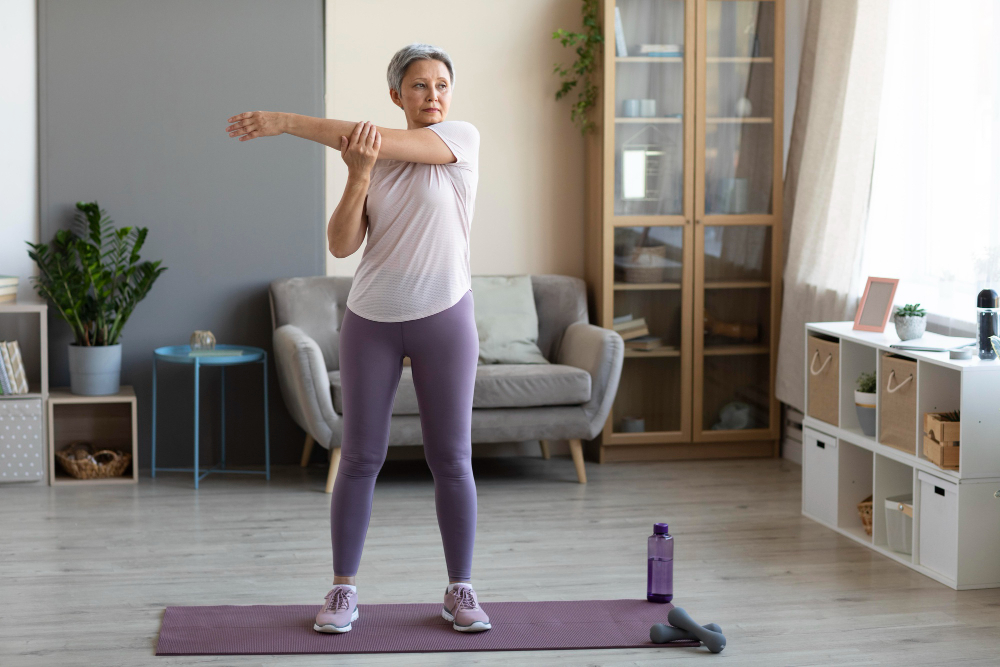
Introduction
Staying active is vital as we age. For women over 60, regular exercise brings many benefits. These include better mobility, increased strength, and a higher quality of life. In fact, exercises for women over 60 can help reduce the risk of falls, boost mood, and keep you independent. Even simple routines can make a big difference. Let’s explore safe and effective ways to stay strong, balanced, and flexible.
Why Exercise Matters After 60
As we grow older, our bodies change. Muscle mass may decrease, and bones can become weaker. However, regular physical activity helps slow these changes. Exercise keeps joints flexible and supports heart health. Moreover, it can improve balance, making falls less likely. According to the CDC, adults over 65 should aim for at least 150 minutes of moderate activity each week. Even gentle movement can help you feel better and stay active longer.
5 Best Exercises for Women Over 60
1. Chair Squats
Key Benefits: Chair squats build leg and hip strength. They also help with balance and make daily tasks easier.
Safety Tips: Always use a stable chair. Move slowly and stop if you feel pain or dizziness.
2. Wall Push-Ups
Key Benefits: Wall push-ups strengthen the chest, arms, and shoulders. They are a safe exercise for seniors.
Safety Tips: Keep your feet flat and do not lock your elbows. If you feel any shoulder pain, stop right away.
3. Heel-to-Toe Walk
Key Benefits: This balance exercise for elderly women improves stability and coordination. It can help prevent falls.
Safety Tips: Use a wall or sturdy surface for support if needed. Go slowly and focus on each step.
4. Seated Leg Raises
Key Benefits: Seated leg raises help strengthen thigh muscles. They also support knee and hip health.
Safety Tips: Keep your back straight. If you feel any discomfort, stop and rest.
5. Gentle Neck and Shoulder Stretches
Key Benefits: These flexibility exercises for older adults reduce stiffness. They also help relieve tension in the neck and shoulders.
Safety Tips: Move gently and never force a stretch. Stop if you feel sharp pain.
Tips for Getting Started
Before you begin any new routine, talk to your healthcare provider. This is especially important if you have health conditions. Start slow and choose exercises that feel comfortable. For example, begin with fewer repetitions and add more as you get stronger. Listen to your body and rest when needed. You can also join a local exercise class or find a physiotherapist in your area for extra support.
Safety Precautions and When to Seek Help
Staying safe is key. Always warm up before you exercise and cool down afterward. Drink water and wear comfortable clothes. Stop exercising right away if you feel:
If these symptoms do not go away, seek medical help. Remember, it’s better to be cautious. Professional advice can help you avoid injury and stay healthy.
Frequently Asked Questions
How often should women over 60 exercise?
Most experts, including the CDC, suggest at least 150 minutes of moderate activity each week. This can be spread over several days. Even short sessions are helpful.
Are strength training exercises safe for women over 60?
Yes, strength training for women over 60 is safe when done correctly. Start with light weights or bodyweight moves. Always use proper form and increase intensity slowly.
What if I have joint pain or arthritis?
Many safe exercises for seniors can be adapted for joint pain. Low-impact moves, like swimming or walking, are gentle on the joints. Always check with your doctor before starting.
Conclusion
Staying active after 60 can boost your strength, balance, and flexibility. These five exercises are a great place to start. However, always consult your doctor or a physiotherapist before beginning any new exercise routine. Your health and safety come first.