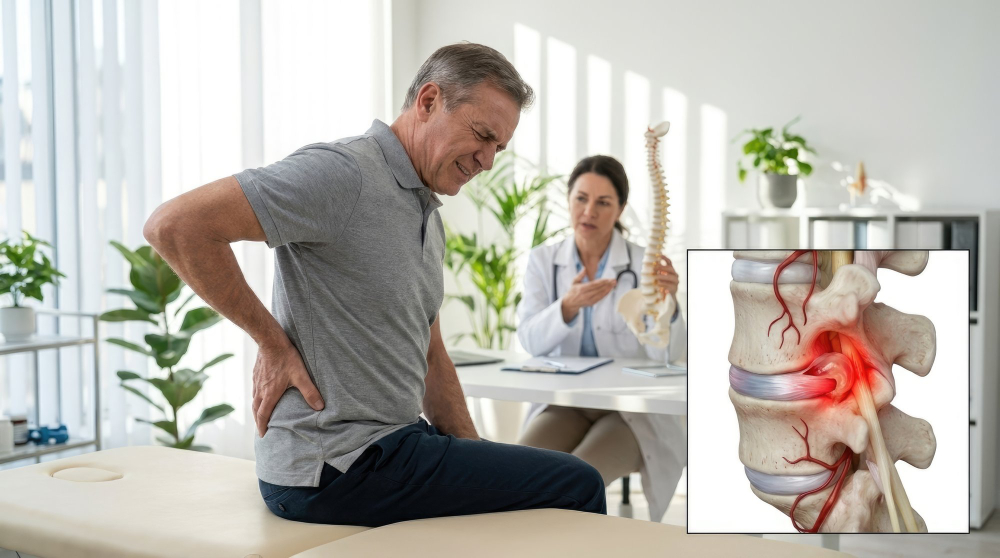
What is Sciatica?
Sciatica is a type of pain that starts in your lower back and travels down your leg. Often, this pain follows the path of the sciatic nerve. This nerve runs from your lower back, through your hips, and down each leg. Because the pain can be sharp or burning, it can make daily tasks hard. For many people, sciatica pain relief becomes a top priority. According to the World Health Organization, back pain is a leading cause of disability worldwide. Therefore, understanding sciatica is important for many people.
Common Symptoms of Sciatica
Sciatica can cause more than just back pain. In fact, the pain often spreads down one leg. Sometimes, it can reach your foot or toes. Besides pain, you may notice other symptoms. For example, you might feel:
Because these symptoms can vary, it is important to track what you feel. If you notice sudden weakness or loss of bladder control, seek medical help right away.
Causes and Risk Factors
Most often, sciatica happens when something presses on the sciatic nerve. For example, a slipped disc in your back can cause this pressure. Other causes include:
Some people are more likely to get sciatica. For instance, risk factors include:
Because these factors can add up, it is helpful to know your own risks.
How Sciatica is Diagnosed
Doctors use several steps to diagnose sciatica. First, they ask about your symptoms and medical history. Next, they do a physical exam. During the exam, your doctor may check your reflexes, muscle strength, and how you walk. Sometimes, imaging tests help confirm the cause. For example, your doctor may order:
Because sciatica can look like other problems, these tests help find the best treatment options.
Physiotherapy Treatments for Sciatica
Physiotherapy for sciatica is a common way to find pain relief. In many cases, it helps people move better and feel less pain. A physiotherapist will create a plan just for you. This plan often includes:
Because each person is different, your treatment may change over time. Many people notice less pain and better movement after a few weeks. According to the CDC, staying active is key for back pain down the leg. Therefore, physiotherapy is a safe and proven option for sciatica pain relief.
At-Home Exercises and Lifestyle Tips
Along with physiotherapy, you can try some at-home steps for sciatica pain relief. For example, gentle movement can help reduce pain. Here are some tips:
Because rest alone can make pain worse, it is better to stay active. However, avoid heavy lifting or twisting until your pain improves. If you have questions, ask your physiotherapist for safe exercise ideas.
Prevention of Sciatica
While not all cases can be prevented, some steps may lower your risk of sciatica. For instance, you can:
Because small changes can add up, these habits may help prevent back pain down the leg. If you have had sciatica before, talk with your physiotherapist about ways to avoid future flare-ups.