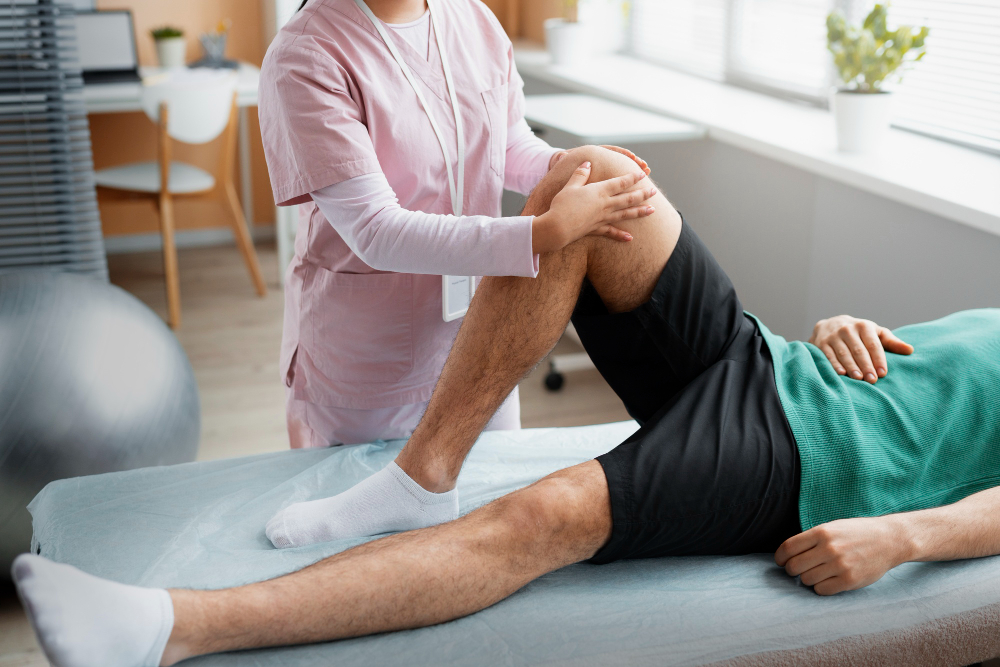
What is Knee Pain Physiotherapy?
Knee pain physiotherapy helps people manage and reduce knee discomfort. It uses special exercises and treatments to make the knee stronger and more flexible. Often, these exercises can be done at home. For example, prone straight leg raises are a common part of knee pain physiotherapy. They help support the knee and improve movement. Many people find these exercises helpful for daily activities. According to the CDC, exercise is a safe and effective way to manage joint pain.
Benefits of Prone Straight Leg Raises for Knee Pain
Prone straight leg raises are simple but powerful. They target the muscles at the back of your thigh, called the hamstrings, and your glutes. These muscles support your knee. When they are strong, your knee feels more stable. Additionally, this exercise can help reduce pain and prevent future injuries. Here are some key benefits:
Because of these benefits, prone straight leg raises are a popular choice for safe physiotherapy for knee pain.
Step-by-Step Guide: How To Perform Prone Straight Leg Raises
It is important to use the correct prone straight leg raise technique. This helps you get the most benefit and avoid injury. Follow these steps:
For best results, try to do these knee pain exercises at home two to three times a week. However, always listen to your body and stop if you feel pain.
Safety Tips and Common Mistakes
Staying safe is very important when doing physiotherapy at home. Here are some tips to help you avoid common mistakes:
Moreover, remember that proper form is more important than the number of repetitions. If you are unsure, ask a physiotherapist to show you the correct technique.
When To Consult a Physiotherapist
Sometimes, knee pain can be a sign of a more serious problem. You should consult a licensed physiotherapist if:
In these cases, a physiotherapist can create a safe and effective plan just for you. According to the World Health Organization, early treatment can help prevent long-term problems.
Frequently Asked Questions
Can I do prone straight leg raises every day?
Yes, you can do them daily if your body feels comfortable. However, rest days help your muscles recover.
Do I need any equipment for this exercise?
No, you only need a soft mat or towel for comfort.
Is this exercise safe for all ages?
Most people can do this exercise safely. Still, older adults or those with injuries should check with a doctor first.
How soon will I see results?
With regular practice, you may notice stronger muscles and less pain in a few weeks.
For more information, visit trusted sources like the CDC or talk to your healthcare provider.
Consult a licensed physiotherapist for personalized knee pain management and exercise guidance.